SET [GLOBAL|SESSION] <variable>
The statement SET [GLOBAL|SESSION] modifies one of TiDB's built in variables, of either SESSION or GLOBAL scope. Note that similar to MySQL, changes to GLOBAL variables will not apply to either existing connections, or the local connection. Only new sessions will reflect the changes to the value.
Synopsis
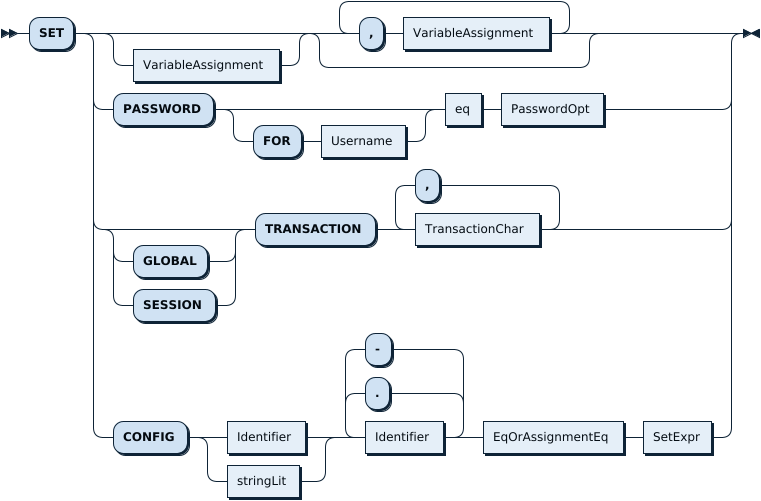
SetStmt:
Examples
mysql> SHOW GLOBAL VARIABLES LIKE 'sql_mode';
+---------------+-------------------------------------------------------------------------------------------------------------------------------------------+
| Variable_name | Value                                                                                                                                     |
+---------------+-------------------------------------------------------------------------------------------------------------------------------------------+
| sql_mode      | ONLY_FULL_GROUP_BY,STRICT_TRANS_TABLES,NO_ZERO_IN_DATE,NO_ZERO_DATE,ERROR_FOR_DIVISION_BY_ZERO,NO_AUTO_CREATE_USER,NO_ENGINE_SUBSTITUTION |
+---------------+-------------------------------------------------------------------------------------------------------------------------------------------+
1 row in set (0.00 sec)

mysql> SHOW SESSION VARIABLES LIKE 'sql_mode';
+---------------+-------------------------------------------------------------------------------------------------------------------------------------------+
| Variable_name | Value                                                                                                                                     |
+---------------+-------------------------------------------------------------------------------------------------------------------------------------------+
| sql_mode      | ONLY_FULL_GROUP_BY,STRICT_TRANS_TABLES,NO_ZERO_IN_DATE,NO_ZERO_DATE,ERROR_FOR_DIVISION_BY_ZERO,NO_AUTO_CREATE_USER,NO_ENGINE_SUBSTITUTION |
+---------------+-------------------------------------------------------------------------------------------------------------------------------------------+
1 row in set (0.00 sec)

mysql> SET GLOBAL sql_mode = 'STRICT_TRANS_TABLES,NO_AUTO_CREATE_USER';
Query OK, 0 rows affected (0.03 sec)

mysql> SHOW GLOBAL VARIABLES LIKE 'sql_mode';
+---------------+-----------------------------------------+
| Variable_name | Value                                   |
+---------------+-----------------------------------------+
| sql_mode      | STRICT_TRANS_TABLES,NO_AUTO_CREATE_USER |
+---------------+-----------------------------------------+
1 row in set (0.00 sec)

mysql> SHOW SESSION VARIABLES LIKE 'sql_mode';
+---------------+-------------------------------------------------------------------------------------------------------------------------------------------+
| Variable_name | Value                                                                                                                                     |
+---------------+-------------------------------------------------------------------------------------------------------------------------------------------+
| sql_mode      | ONLY_FULL_GROUP_BY,STRICT_TRANS_TABLES,NO_ZERO_IN_DATE,NO_ZERO_DATE,ERROR_FOR_DIVISION_BY_ZERO,NO_AUTO_CREATE_USER,NO_ENGINE_SUBSTITUTION |
+---------------+-------------------------------------------------------------------------------------------------------------------------------------------+
1 row in set (0.00 sec)

mysql> SET SESSION sql_mode = 'STRICT_TRANS_TABLES,NO_AUTO_CREATE_USER';
Query OK, 0 rows affected (0.01 sec)

mysql> SHOW SESSION VARIABLES LIKE 'sql_mode';
+---------------+-----------------------------------------+
| Variable_name | Value                                   |
+---------------+-----------------------------------------+
| sql_mode      | STRICT_TRANS_TABLES,NO_AUTO_CREATE_USER |
+---------------+-----------------------------------------+
1 row in set (0.00 sec)
MySQL compatibility
The following behavior differences apply:
- Changes made with
SET GLOBALwill be propagated to all TiDB instances in the cluster. This differs from MySQL, where changes do not propagate to replicas. - TiDB presents several variables as both readable and settable. This is required for MySQL compatibility, because it is common for both applications and connectors to read MySQL variables. For example: JDBC connectors both read and set query cache settings, despite not relying on the behavior.
- Changes made with
SET GLOBALwill persist through TiDB server restarts. This means thatSET GLOBALin TiDB behaves more similar toSET PERSISTas available in MySQL 8.0 and above.